In Gladwell’s stories of ‘sudden’ crime, epidemic, death, segregation always lies a hint of hope. It is in the description of the ‘Law of the Few’, where just a tiny fraction of men tipped a system into decline, but also how the law can be applied for positive change.
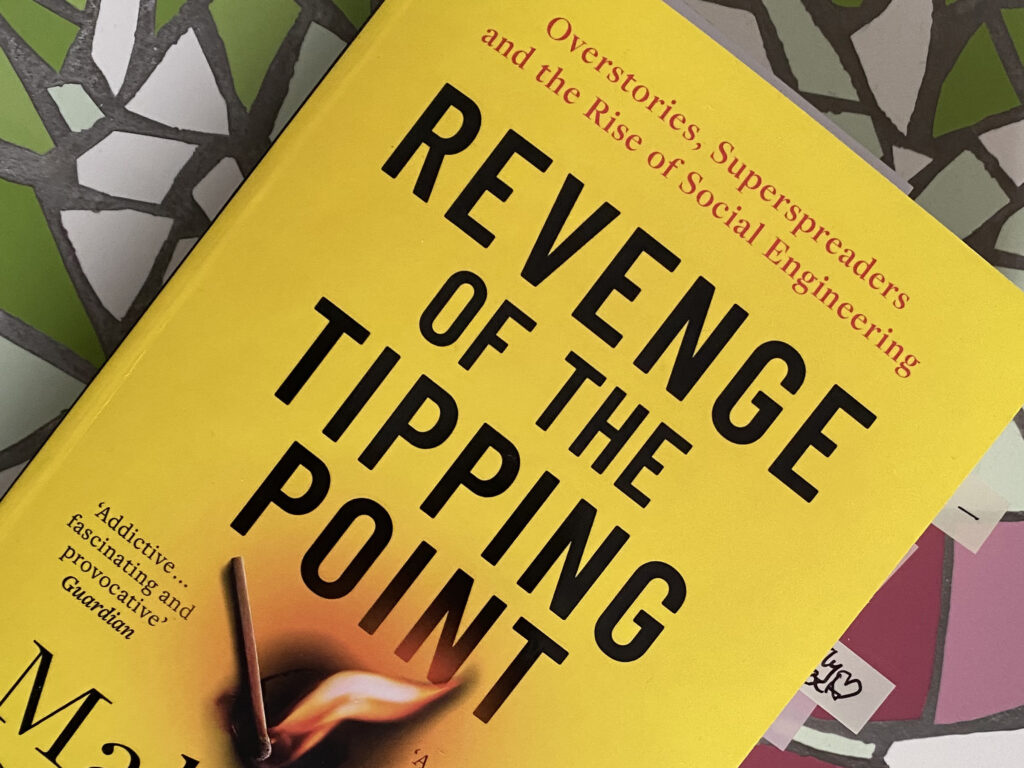
Gladwell describes in the book how a ‘quick and simple refresh of the first book The Tipping Point resulted in a new book Revenge of the Tipping Point. In the book he unravels differences in healthcare costs in the chapter “The trouble with Miami” or how events in history and choices lead to “The Mysterious Case of the Harvard Women’s Rugby Team”. The book read like a crime novel, the stories are captivating. The sobering parts are the tables with numbers and links to the resources: this has happened and is still happening! So massive recommendation!
I made notes I wanted to share, from the perspective of my own studies and my interest in systems thinking education.
Diversity, path dependency, context dependency
Diversity as an important characteristic of a complex system is visible in the stories. Gladwell mentions the differences in the application of Cardiac Catheterisation between Boulder and Buffalo. In his analysis he shows how these differences emerged from a variation of influences, as well as how the current influences in the system might sustain these differences. This example is excellent for explaining path dependency and context dependency.
The history of the current drug epidemic in the US also shows how events in the past impact the current crisis. Most interesting, how one man’s action to start regulating drug prescriptions slowed the (ab)use, other men’s actions to support patients with pain lead to a large increase. And moreover, how a drug company’s strive to maximize profit was the catalyst.
The law of the few
This leads toward the Law of the Few. Gladwell used the Law in two ways, which can be confusing. On the one hand, it shows how a small group can cause a large problem; 5% of the vehicles cause 55% of the automobile pollution. However, this is a more static situation. He uses the same Law for the small size of a group, which above a threshold (Magic Quarter of Magic Third) can create a tipping point. This is dynamic.
My thoughts
First: One example discussed the change in acceptance of gay marriage, which he linked to a large group of people watching Will & Grace (I simplified it, read the book for the full story on p. 234 – 257). Earlier in the book (p. 223) Gladwell also listed the reducing numbers of people watching the finales of tv-series over the years (M.A.S.H. 45,5% in 1983 to Big Bang Theory 5,4% in 2019), due to more networks. Now we have a diversified information landscape, including tv, social media, online channels. And I am wondering how this would influence tipping points within boundaries and across boundaries. Does this create a more static status quo of smaller and extremer groups and will slow changes in large groups (country) be more difficult?
Second: it is hopeful that we don’t need a majority of people to create a tipping point.
Gladwell, M. (2024). Revenge of the Tipping Point: Overstories, Superspreaders and the Rise of Social Engineering. Hachette UK.
”This isn’t really about learning about what works,” Molitor says. “It’s more about the influences of your environment.”
(Gladwell, 2024: p 51)
“That’s the Law of the Few: It’s a very large problem caused by a very small number of actors.”
(Gladwell, 2024: p 182)